
A creative practice for noticing, responding and keeping a trace.
A Sensory Diary is a creative way of keeping small traces of what you notice, experience and respond to.
It might begin with a colour that caught your eye, a shape, a texture, a mark, a place, a feeling — or simply something you keep thinking about. You take that small impression and give it a visual form.
It isn’t about documenting everything that happens in your day. It is about noticing what stays with you.
It Starts with Noticing
You don’t have to go looking for inspiration.
Sometimes something catches your attention several times before you even think about using it. A plant. A window. The colours of the sea. A pattern on the pavement. A piece of packaging.
You notice it. You look a little closer. And eventually you might ask:
What could I take from this?
That can be enough to begin.
You Don’t Need to Find Inspiration
Not every day comes with an interesting idea.
Sometimes I simply choose a colour I love, work with an old print, or put some paint on my Gelli Plate and see what happens.
The important thing isn’t to make something meaningful every day. It’s to keep the connection to the practice alive.
Sometimes five minutes is enough.
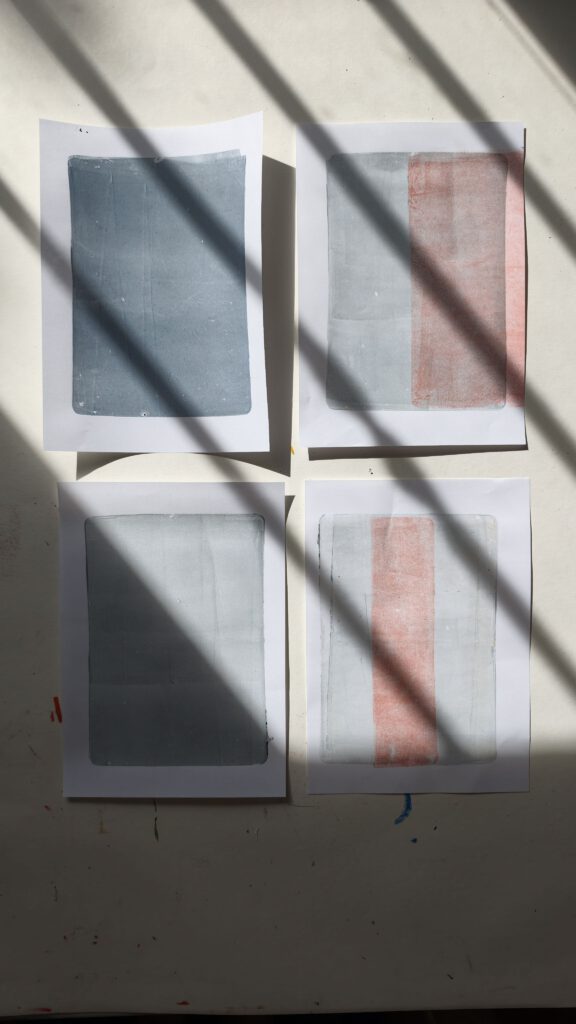
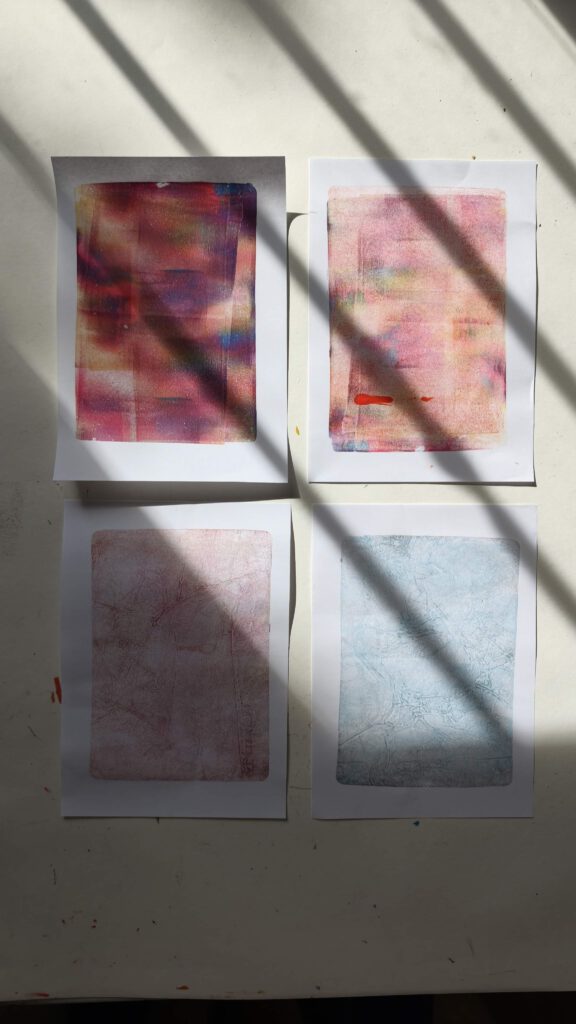
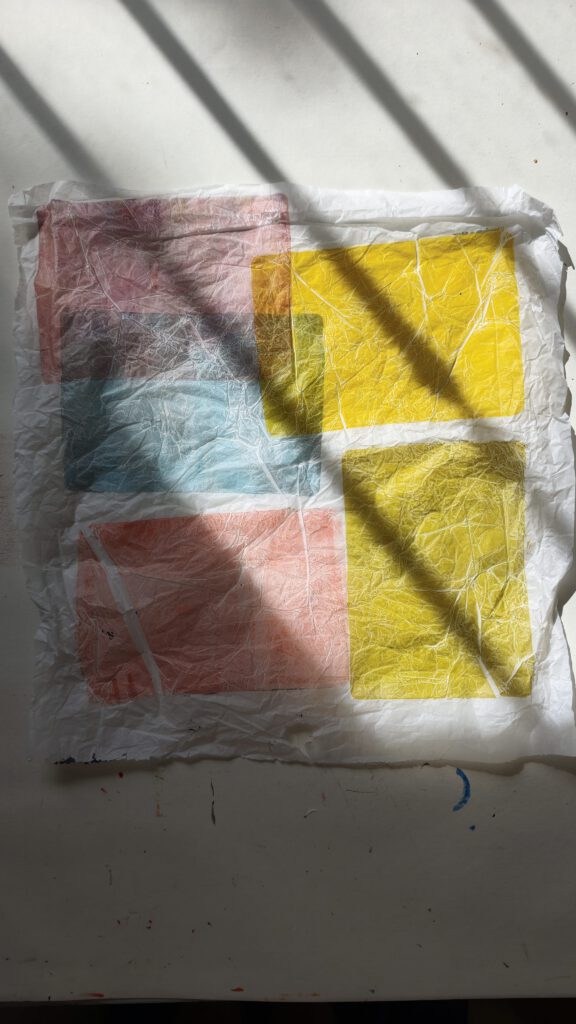
This is the result of a 5 minutes practice. I started with background prints in Payne’s grey and kept experimenting or 30 minutes.
The Medium Is Yours
I use a Gelli Plate because it gives me a playful way to respond to what I notice. I can work with colour, shape, texture, layers and found materials without knowing exactly where the experiment will lead.
But a Sensory Diary isn’t about the Gelli Plate.
You might paint, draw, make a collage, take photographs, print, work with textiles — or use a completely different medium.
The medium is simply the language you choose to respond with.
Follow What Catches Your Attention
Some of my favourite experiments begin with a very simple question:
What happens if…?
I try something. I look at the result. I change one thing. Another question appears.
Sometimes I follow the same idea for several days. Sometimes something completely different catches my attention.
Your creative practice doesn’t have to move in a straight line.
You can follow a question, leave it, and come back to it weeks or months later.
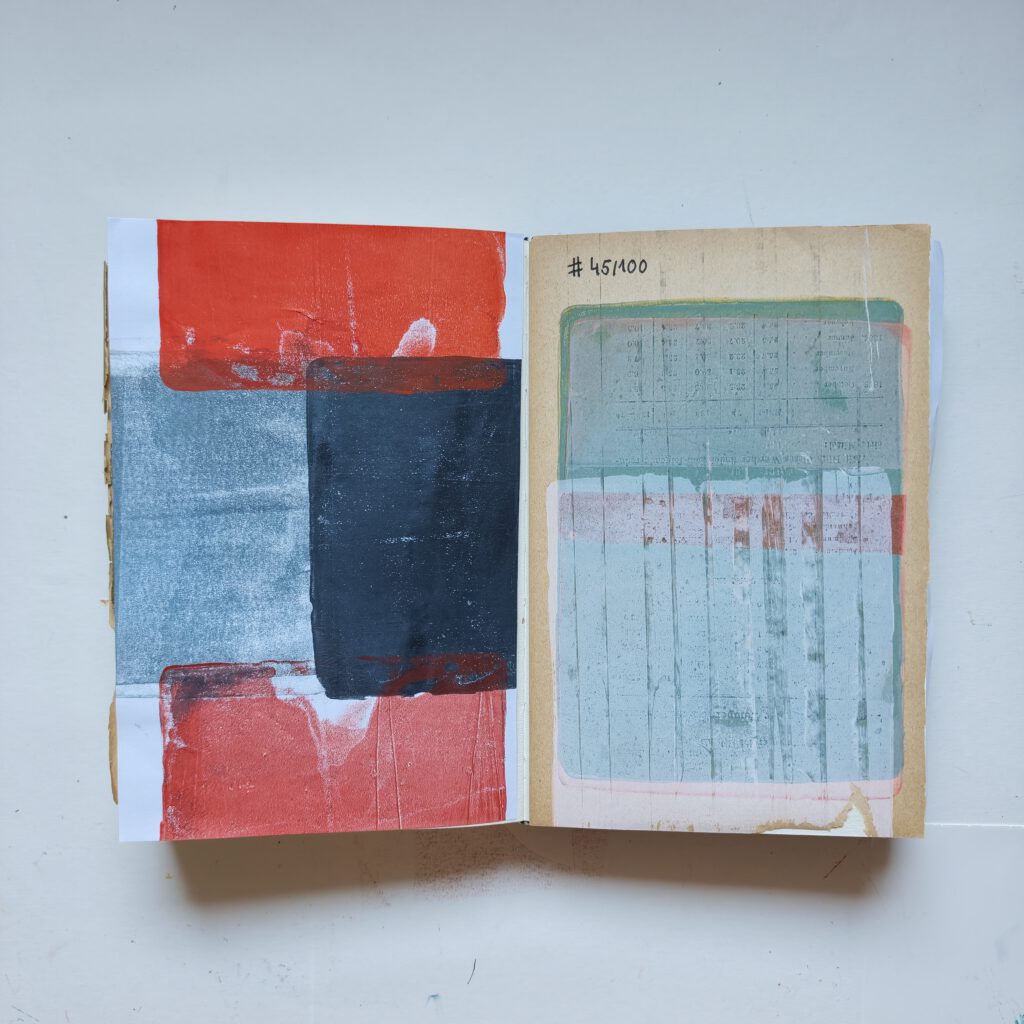
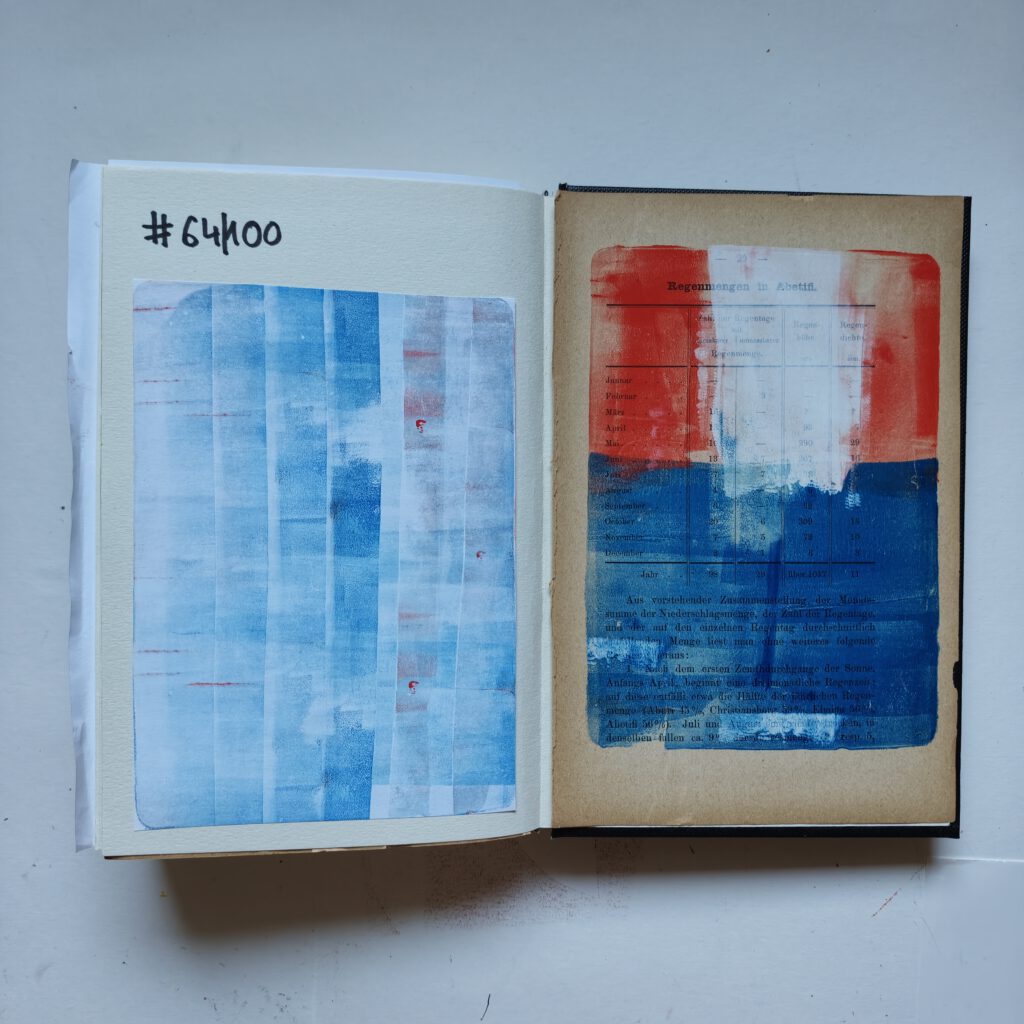
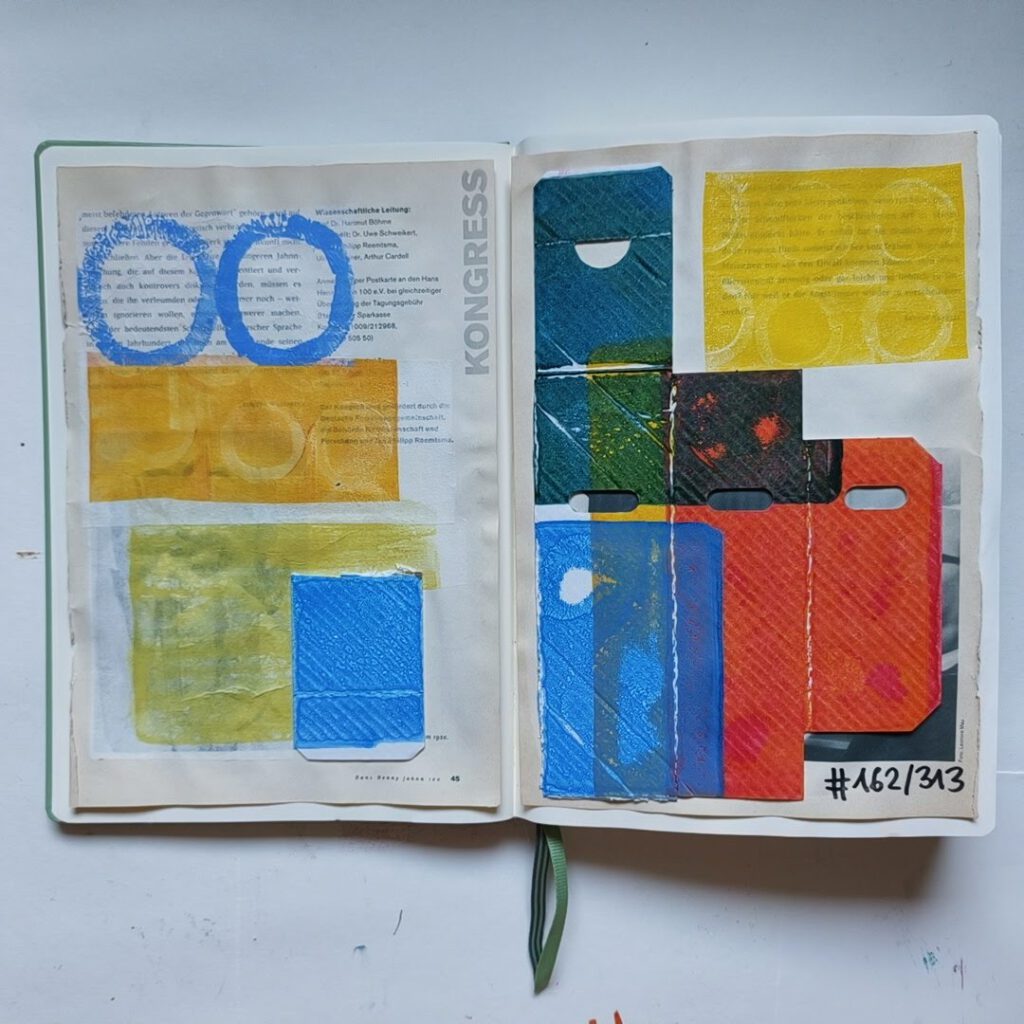
Here you can see results of What if I print on vintage paper? Or What if I create transparent layers on vintage paper?
There Is No Right Result
Not every experiment works.
I’ve learned to look at a print I don’t like as information rather than as a judgement of my ability.
Instead of thinking I’m not good at this, I can ask:
What isn’t working for me?
Maybe it’s the colour. The contrast. The layers. The shape.
I can make a small adjustment, try again — or simply move on.
The result doesn’t have to be successful for the experiment to be useful.
Over Time, Something Begins to Emerge
When you keep making, you start to notice things you return to.
Certain colours. Shapes. Materials. Textures. Ways of layering.
You may not have chosen them as your style. You simply kept coming back to them.
Your visual language doesn’t have to be found. It can be noticed.
The longer you stay with your practice, the more visible your own preferences become.
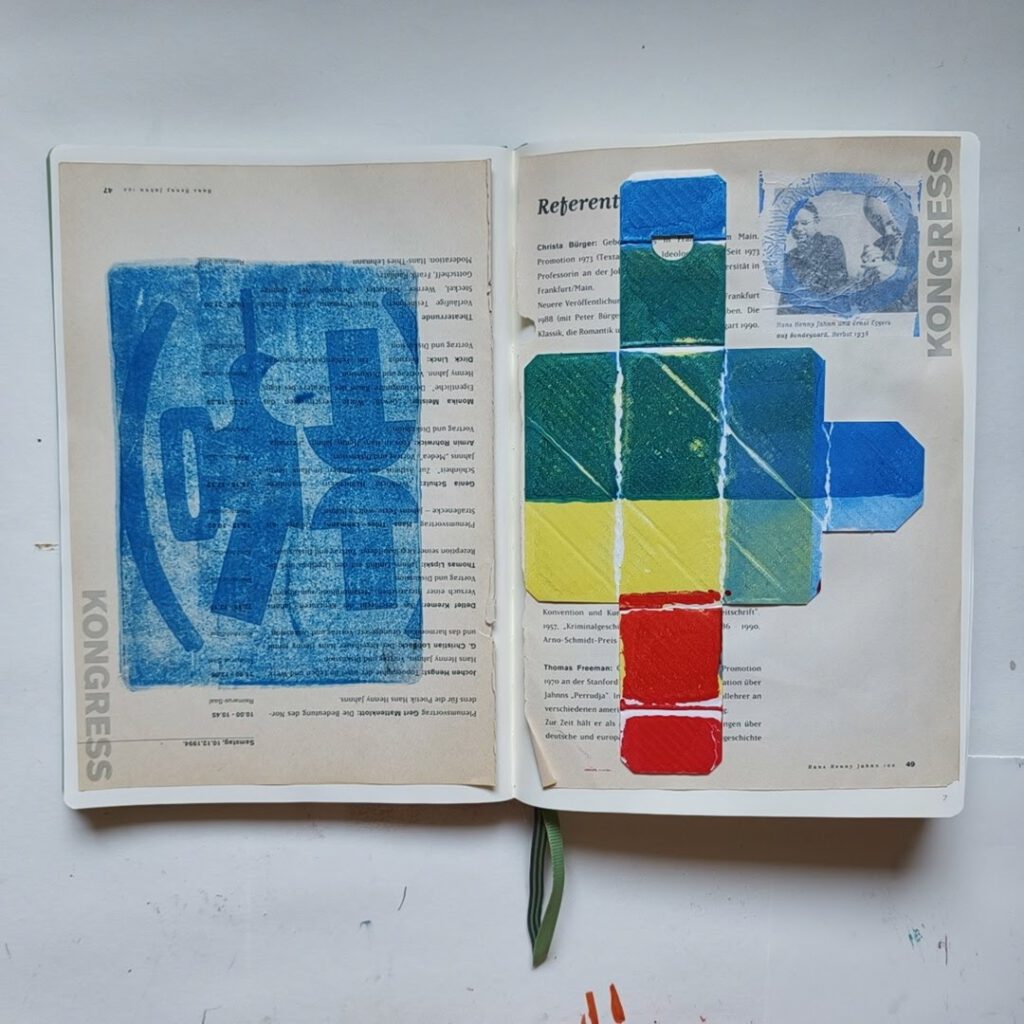
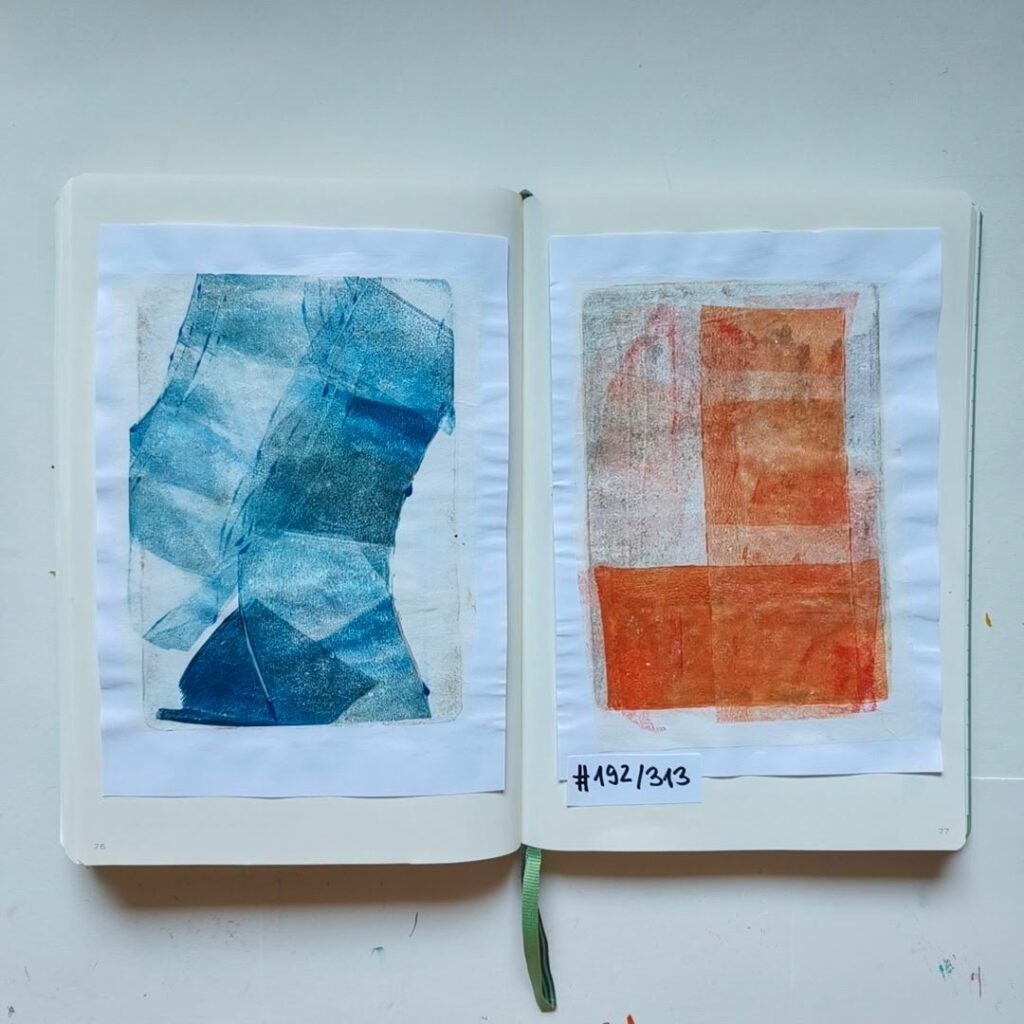
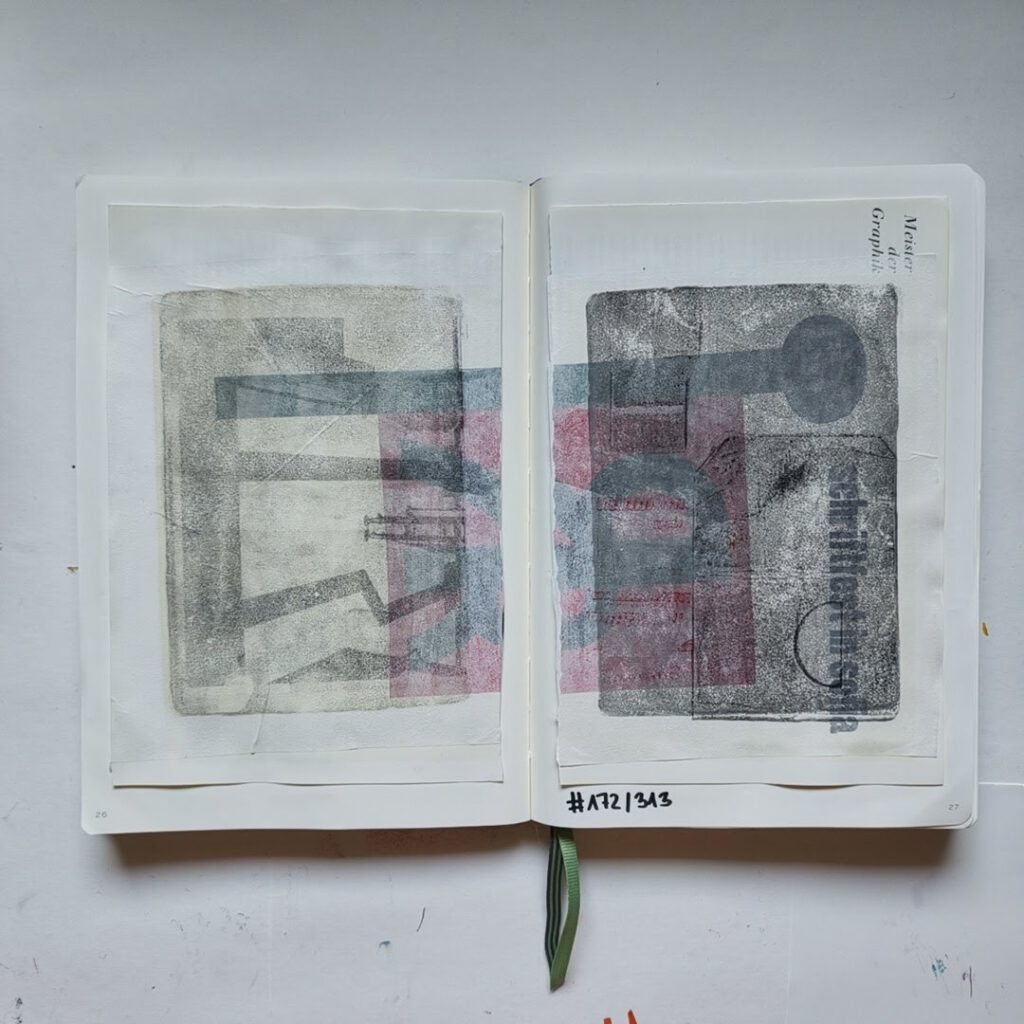
I realised that I love primary colors, transparencies wit rice paper and transparencies on vintage paper.
The Real Practice Is Showing Up
There will be days when you feel inspired and days when you don’t.
The important thing is not to produce something wonderful every time. It is to keep making small beginnings.
Because you have to be there for the ordinary days to get to the unexpected ones.
And something changes when you stay.
You learn to trust your choices. To follow your curiosity. To let go of what doesn’t work. To try again.
The work changes. But so do you.
A Sensory Diary Can Look Different for Everyone
There is no fixed format.
For me, it has become a collection of Gelli Plate prints, collages and Art Journal pages. Sometimes the starting point is something I noticed during the day. Sometimes it is simply a colour, an old print or a piece of paper that makes me curious.
Your Sensory Diary might look completely different.
That’s the point.
You make your own doors.
Explore my Sensory Diary
If you want to see what this practice looks like in my own work, you can explore some of the ways I’ve been using it:
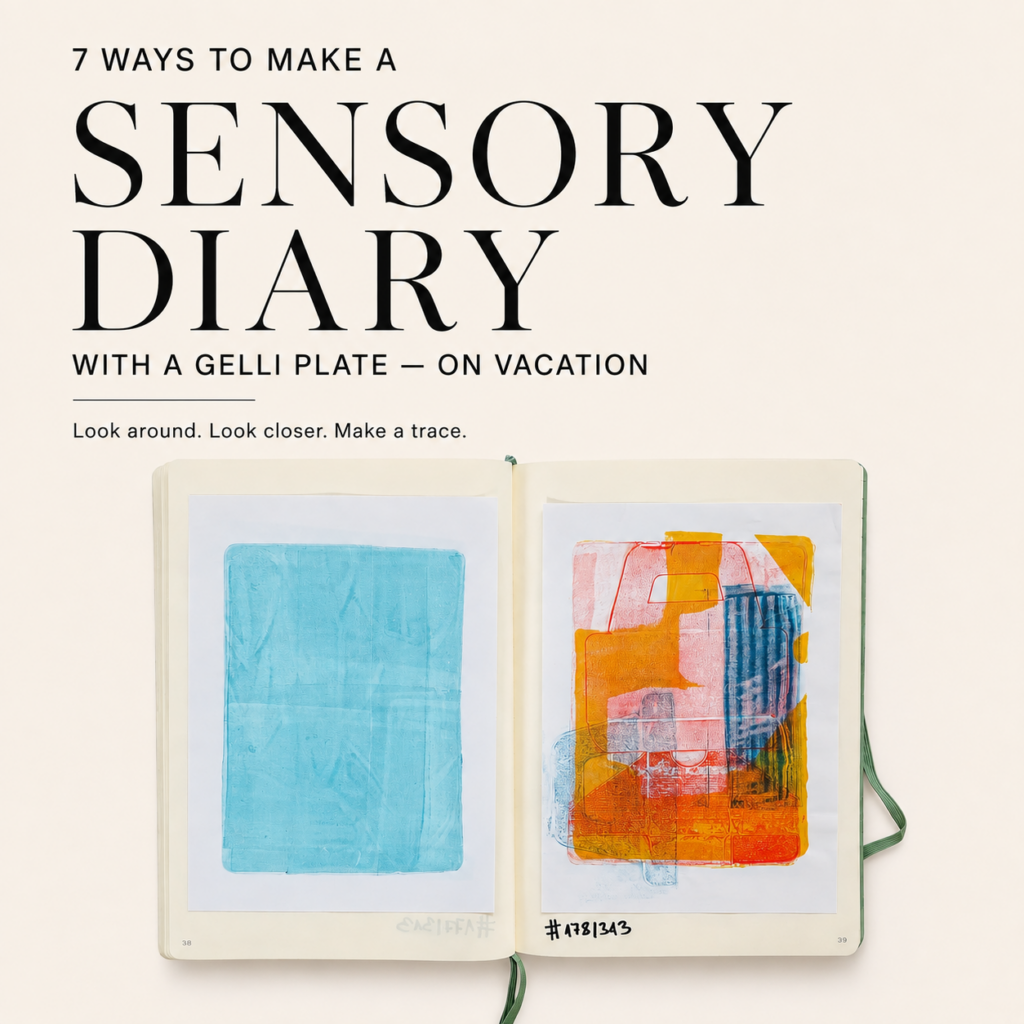
Sensory Diary at the North Sea
Turning a holiday into a visual collection of small impressions. Read the post →
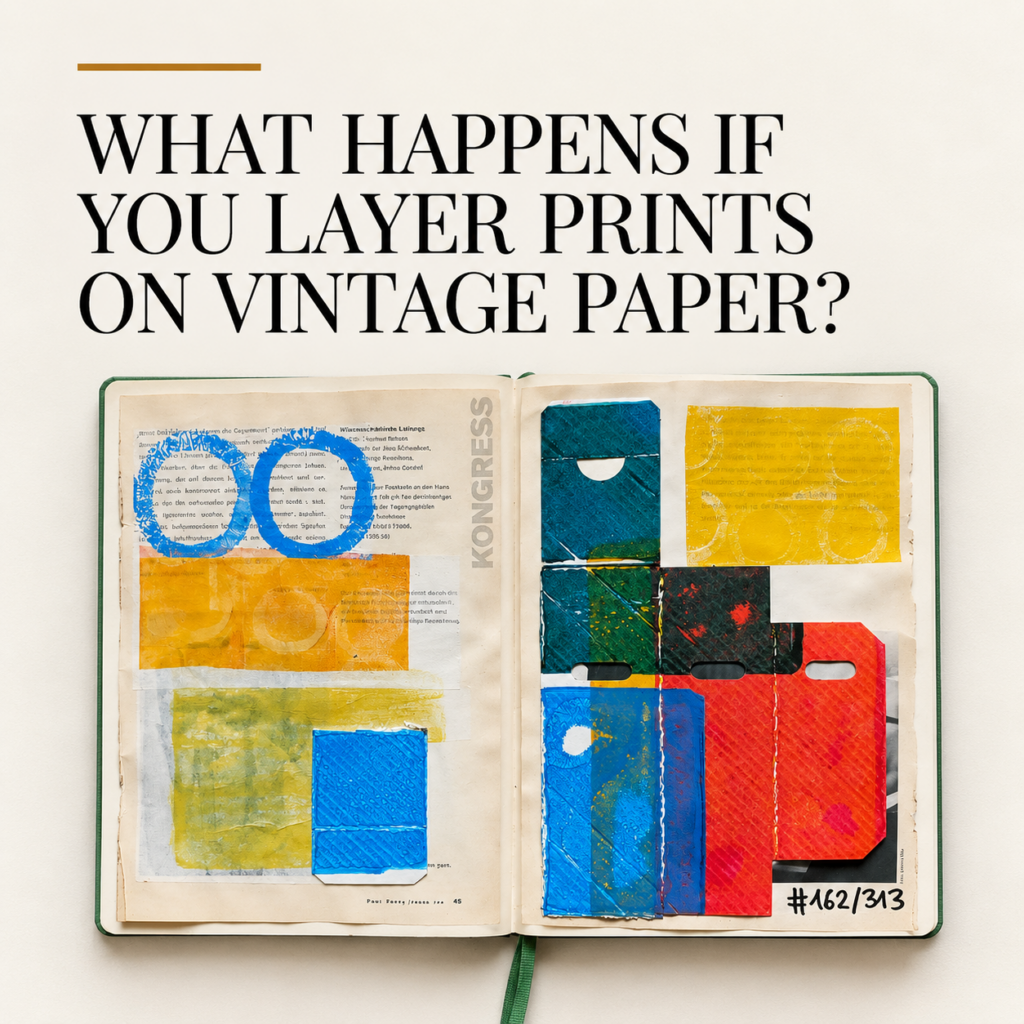
What Happens If You Layer Gelli Plate Prints on Vintage Paper?
Following one experiment through a series of questions. Read the post →